Mina Taghizadeh has participated in the 2024 “World Art Dubai 2024” with 19 works, including 15 paintings and 4 glass sculptures.
Paintings:
Dance for peace collection (Dance for peace, happiness, and life)
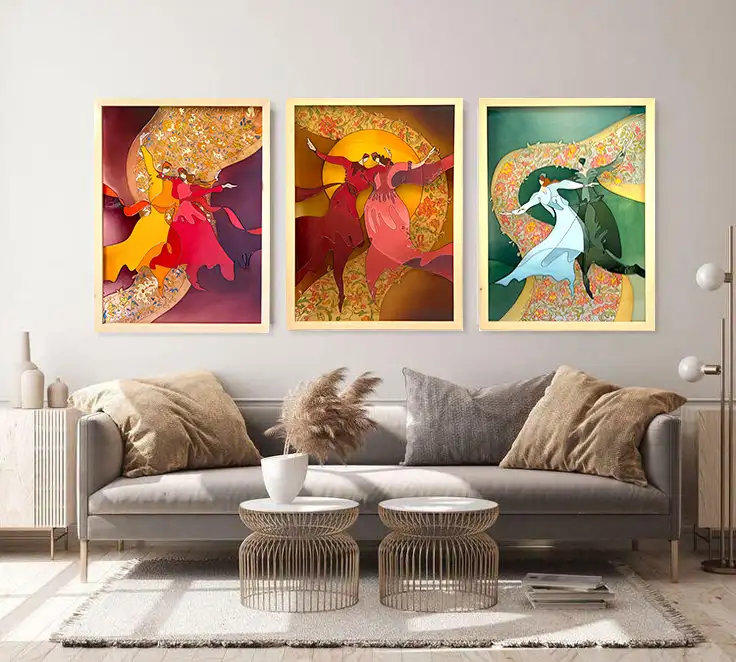
Love without borders collection (Love without borders, flight, and to infinity)
Back to nature
Port girls
Songs of the sea
Liberty
Freedom celebration
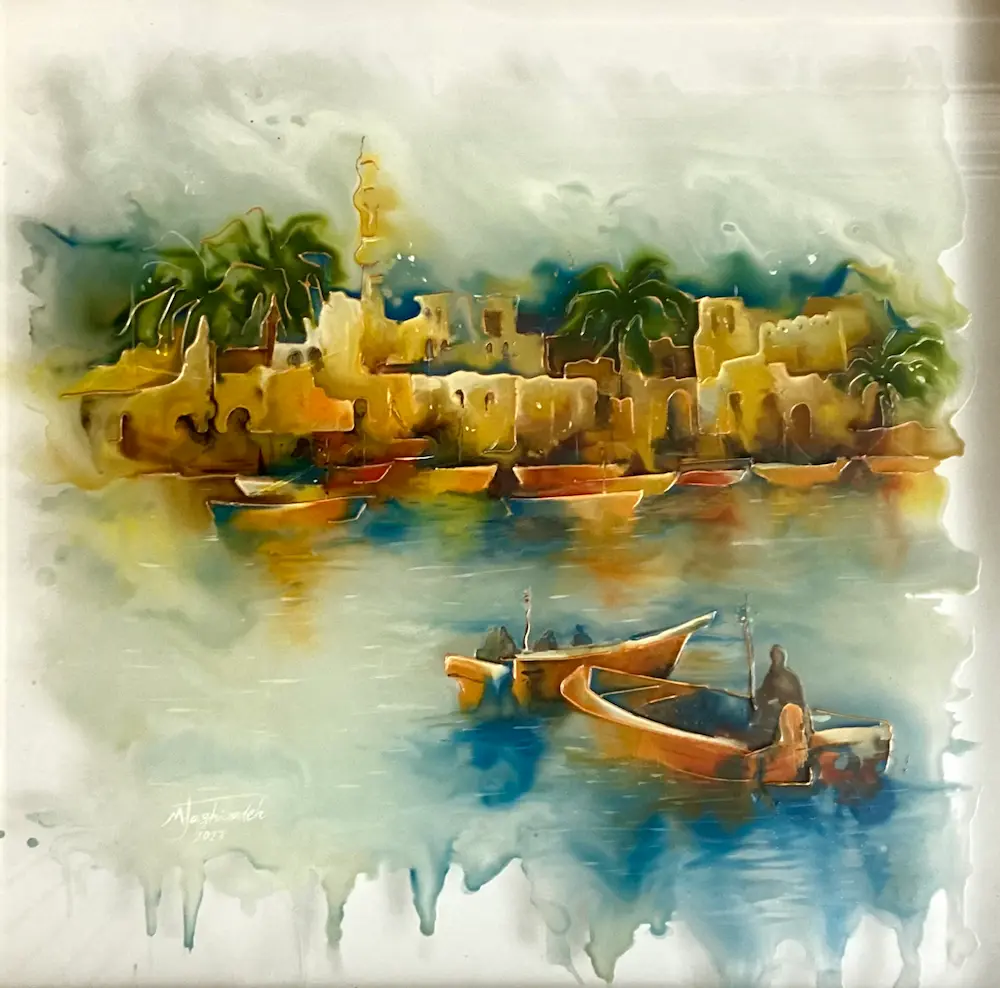
Kangan Port
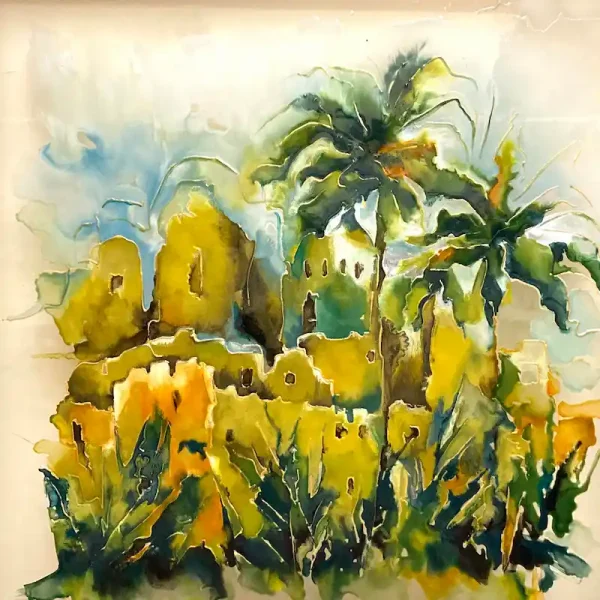
Yazd
Windcatchers
Boushehr
Paintings
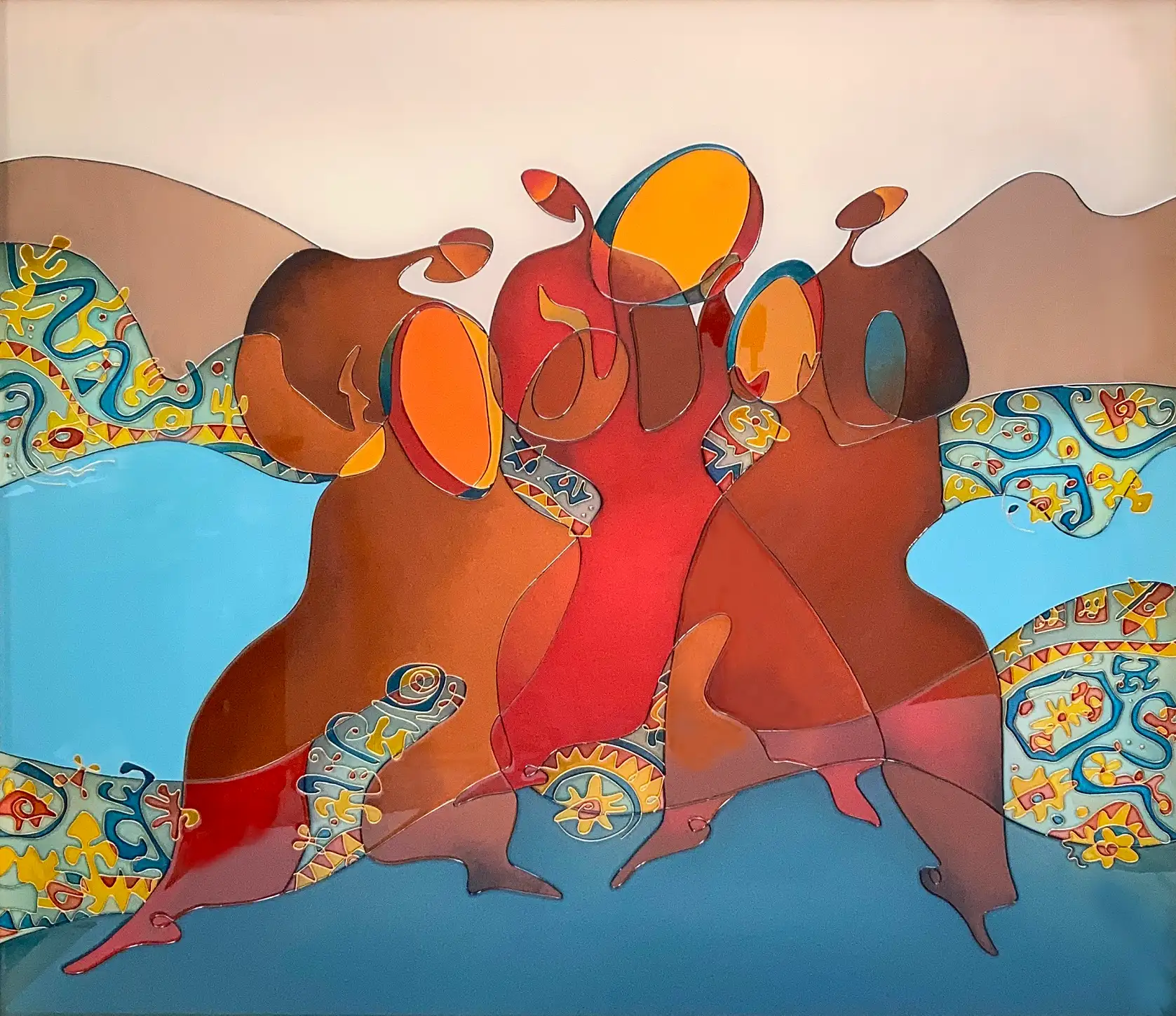
Dance for peace collection
This collection includes three panels that narrate several scenes of this extraordinary dance. In the main painting named dance for peace, I tried to combine the peace bird with the dancer. In the next two paintings (happiness and life), the presence of two dancers shows life and passion. The use of warm colors such as red and orange, along with their complement, which is turquoise, occupies the main part of the painting, and these colors express the concepts of happiness and peace.
Stick dance
Choub bazi (stick dance) is one of Iranian dances with an ancient history. It is a complex and difficult group dance that requires skill, flexibility and physical strength that is performed in Khorasan, Sistan and Balouchestan, and Lorestan provinces of Iran. Stick dance ceremony is related to epic, martial and swordsmanship aspects.
The most common stick dance is a group form. Dancers perform with a special order along with local instruments that is slow at the beginning and gradually gets a fast rhythm. The performers hold two short and strong pieces of wood and take two steps forward and one step back and beat the sticks together in the shape of a cross, followed by a sudden and quick jump. They make a full circle. The accompaniment of the local instruments from the beginning to the end of the dance along with the sound of the sticks, hands and the noise of the audience with the white local clothing, gives a lot of excitement and movement to this beautiful dance.
Love without borders
The beauty of this dance is the movements are divided equally and complementary between man and woman. This dance can perfectly evoke a series of romantic movements. The motifs of this painting are inspired by the Iranian tiles and carpets. The designs of this painting are implemented to coordinate with the overall design, minimal and simple, so that it is suitable for modern decoration. This collection includes three paintings are executed with vitrail colors on Plexiglas.
Back to nature
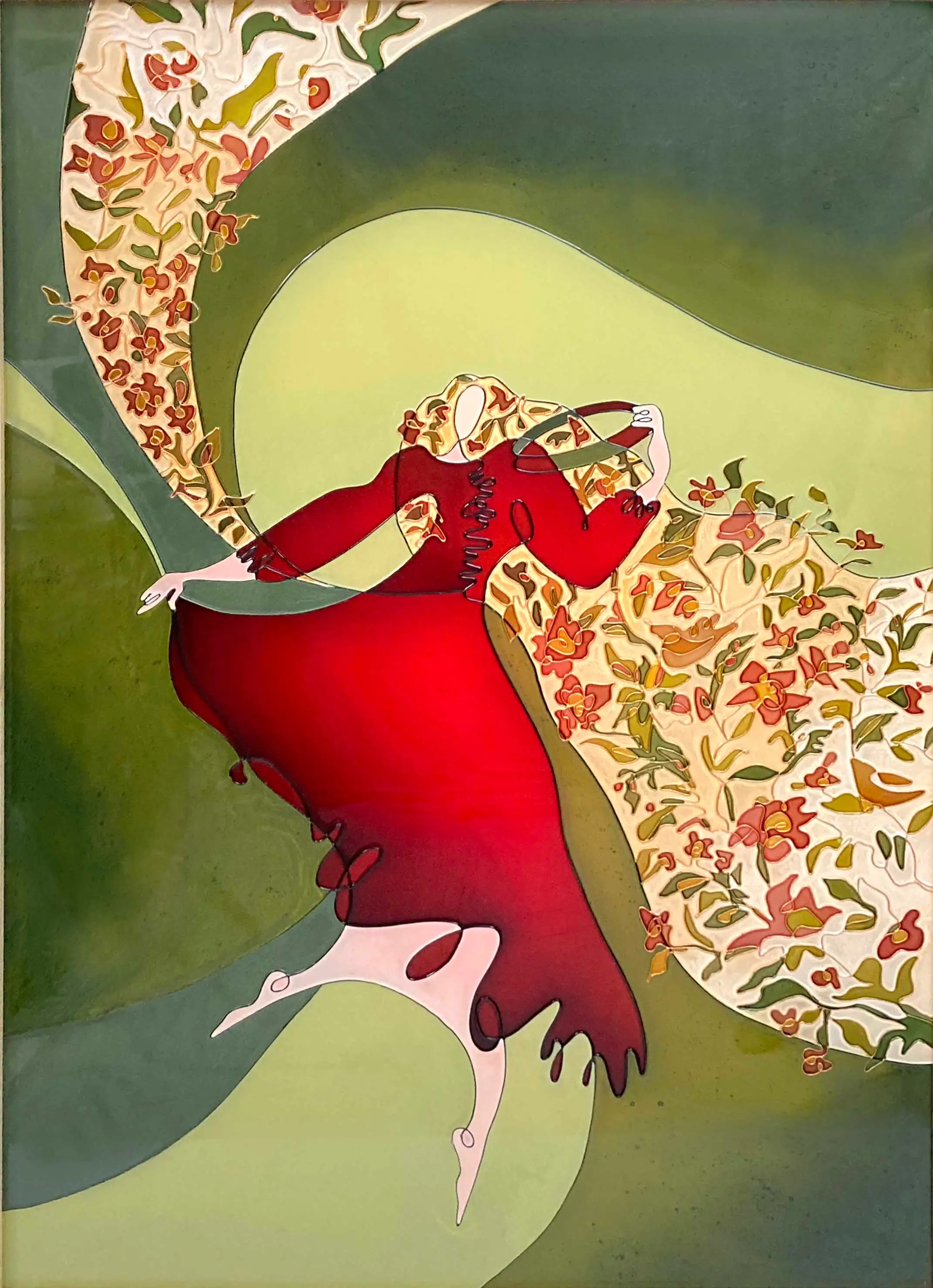
This dance is originally from daily routins of the cities of northern Iran and establishes a link between human and nature. Gilki dance originated when women were working in the rice fields. The container seen in the picture is actually a basket in which cultivated rice is placed. In this work, the motifs of the Iranian carpets are combined with the outline in the form of simplified lines.
Port girls
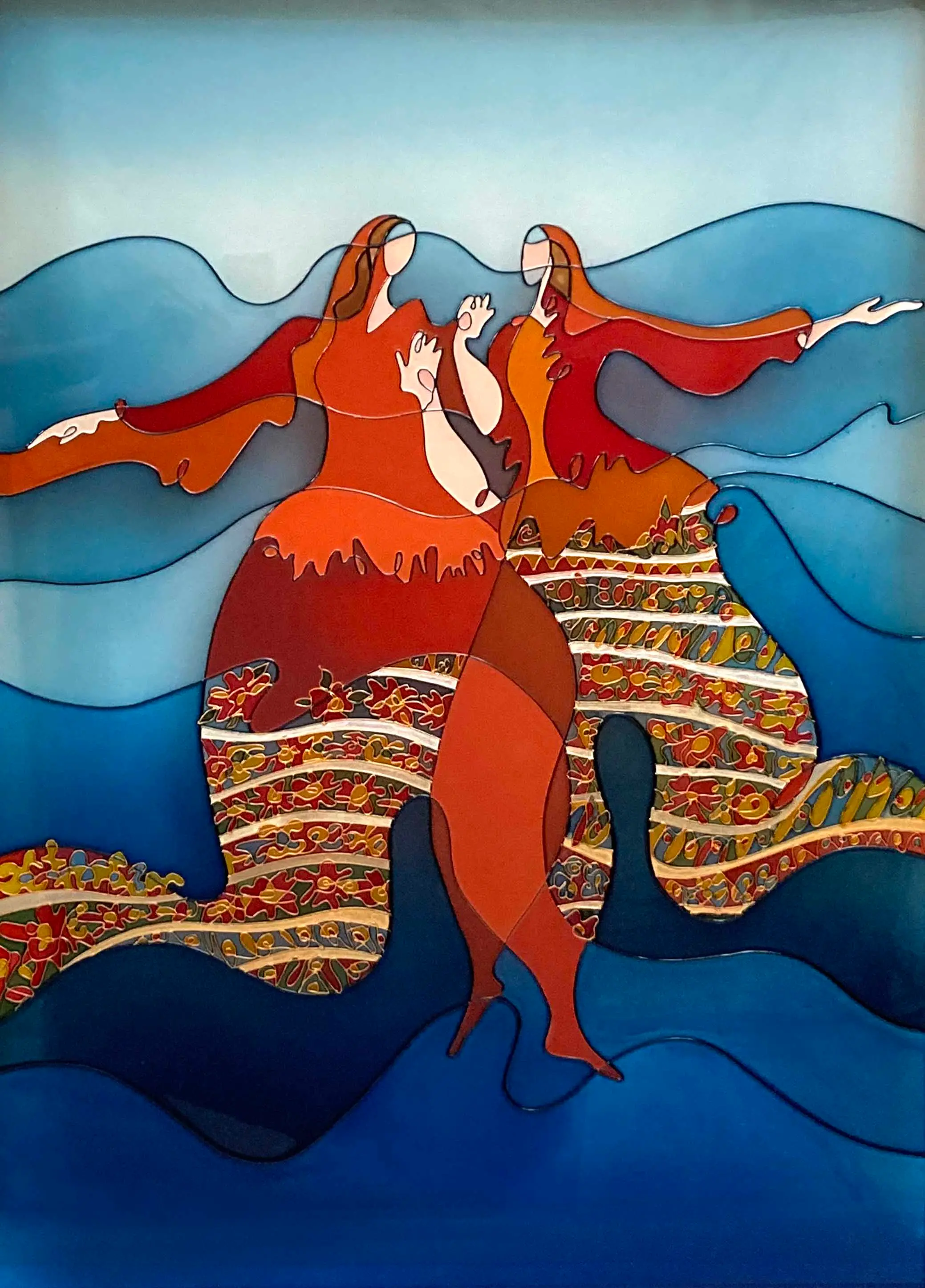
This work is inspired by Bandari dance (a popular dance in southern Iran). The lines that symbolize the waves of the sea are combined with the shape of the girls’ bodies. In this work, it has been tried to show the sense of freedom.
Songs of the sea
This work is inspired by Bushehri instrumentalists. By using warm colors, I have tried to show the feelings of the warm weather in these regions and the fast and exciting rhythm of their local music. Its lines are very simple and the simplified motifs of Iranian rugs make it completely minimal.
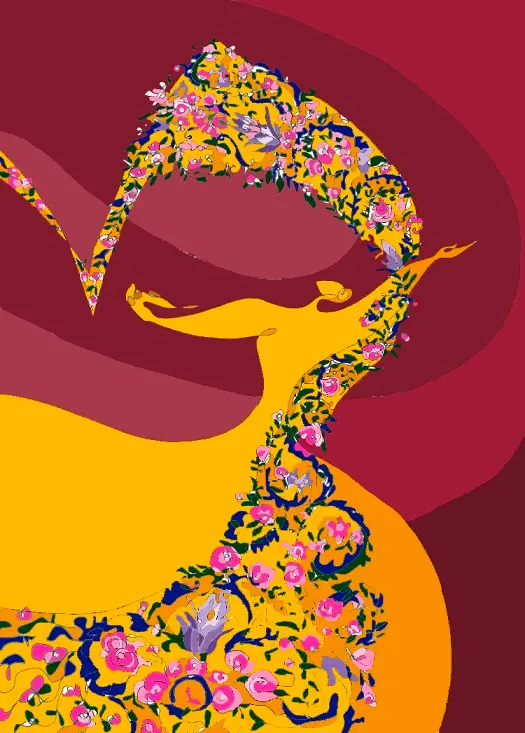
Liberty
This work is a very symbolic work, which is a combination of a free woman dancing with a bird on her hand. The motifs that moved up from her skirt depicts a crescent-shaped arch, which represents Iranian architecture.
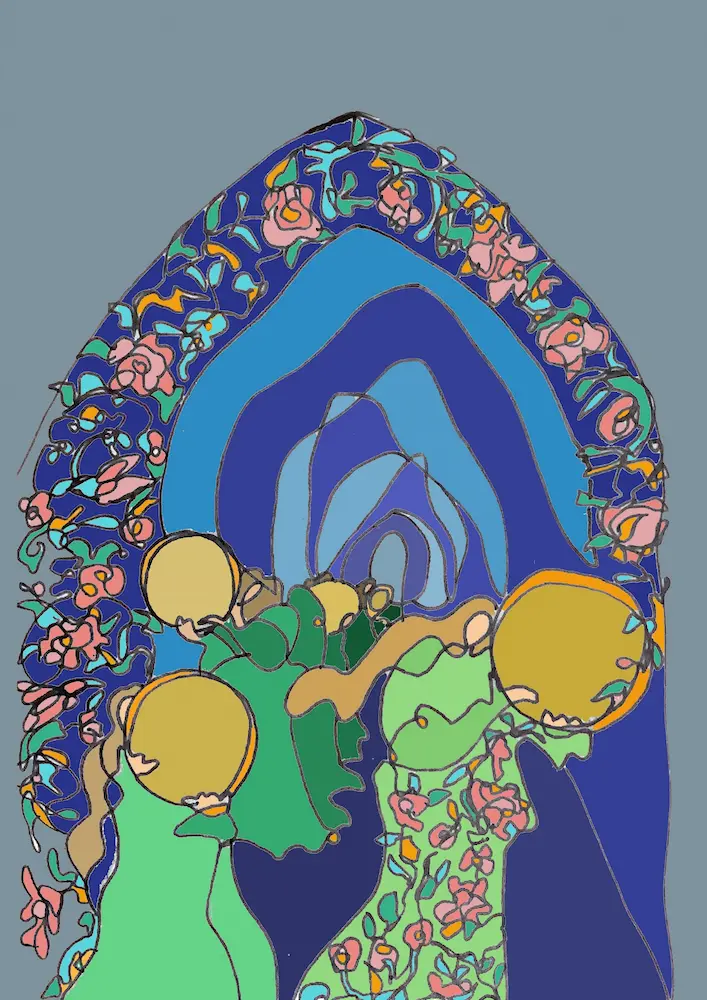
Freedom celebration
This work is actually the narrator of happiness. In the historical texture of a city in Iran, a group of women are playing daf. The patterns that can be seen on the clothes and buildings represent their pure joy.